Trump administration enhances women's health research with new executive orders.
KSAT 12 News
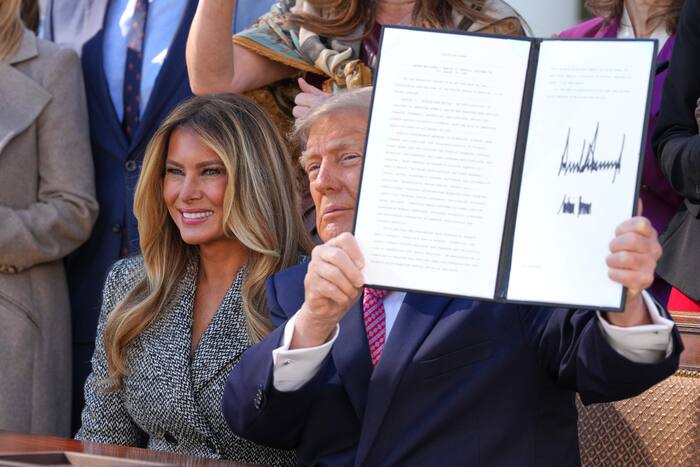
President Donald Trump has signed an executive order to establish a Women's Health Division at the National Institutes of Health (NIH) and a White House Women’s Health Task Force. This initiative, championed by First Lady Melania Trump, aims to address historical gaps in research and treatment for conditions that uniquely affect women.
The newly formed task force will coordinate efforts across federal agencies to improve women's health outcomes throughout their lives, with a focus on prevention, diagnosis, and treatment. The Women's Health Division is set to prioritize research on understudied conditions, ensure women's participation in clinical trials, and promote the development of better diagnostics and therapies.
Melania Trump highlighted the significance of leveraging scientific advancements to enhance health outcomes for women, declaring that this is a transformative moment for women's health in America.
**Sources:** Bloomberg Industry Group, Euronews S.A., HNG News, KSAT 12 News, Nine Entertainment Co., Public Broadcasting Service, The Center Square, The Tribune-Democrat.
Upcoming Medicaid changes could decrease enrollment by 10.5 million and reduce spending.

Virginia Public Media
Upcoming changes to Medicaid are projected to significantly impact enrollment and spending, with analysts estimating a potential decrease of approximately 10.5 million enrollees. This reduction is part of a broader strategy by the Trump administration aimed at addressing perceived fraud within government health programs.
The administration has already cut 760,000 individuals from the Affordable Care Act (ACA) rolls, citing improper enrollments. Critics argue that many of those disenrolled were legitimate beneficiaries who simply failed to respond to outreach efforts. Currently, the Centers for Medicare & Medicaid Services (CMS) is scrutinizing an additional 419,000 enrollments for similar reasons.
The focus on fraud resonates with Republican voters, who are increasingly concerned about government spending. However, Democrats contend that these actions disproportionately affect vulnerable populations. The Congressional Budget Office has projected that these changes could result in 16 million more uninsured individuals by 2034.
The political ramifications of these cuts are significant, particularly in states with high ACA enrollment. Many of the affected individuals reside in states like Texas and Florida, which have seen substantial growth in ACA participation. The administration's approach has raised questions about transparency and the criteria used for disenrollment. Experts warn that legitimate consumers may be caught in the crossfire of these fraud investigations.
As the midterm elections approach, healthcare costs remain a top concern for voters. The ongoing debate over Medicaid and ACA changes is likely to shape campaign narratives. Overall, the upcoming Medicaid changes could lead to both decreased enrollment and reduced federal spending on health programs.
**Sources:**
APG - Associated Press Group
https://kffhealthnews
New York Post
Stat News
The Advocate
Virginia Public Media