Arizona and Nevada sue Trump administration over cuts to Colorado River water supply.

Renewable Energy World.
Arizona has joined Nevada in a lawsuit against the Trump administration concerning proposed cuts to Colorado River water allocations. The Arizona Department of Water Resources has filed a motion to intervene in Nevada's lawsuit, asserting that the federal plan could severely harm Arizona's economy. Officials from Arizona argue that towns, cities, tribes, and businesses in the state rely heavily on Colorado River water for their survival.
Nevada's lawsuit, filed in August, contends that the federal plan disproportionately impacts Lower Basin states like Arizona and Nevada. The water supply from the Colorado River is diminishing due to climate change and outdated agreements that have overpromised water allocations. Both Arizona and Nevada maintain that they have already made significant water conservation efforts and should not bear the brunt of further cuts.
The federal plan proposes a reduction of 760,000 acre-feet of water annually for Arizona, marking the largest cut among Lower Basin states. In comparison, California would face a cut of 440,000 acre-feet, while Nevada would see a reduction of 50,000 acre-feet. Notably, the Upper Basin states are not required to make similar cuts, a situation that has drawn criticism from both Arizona and Nevada.
Arizona Governor Katie Hobbs emphasized that the state will not accept a federal plan that unfairly burdens its residents and businesses. The Department of the Interior has criticized Arizona's legal action, stating that litigation will not resolve the ongoing water crisis. Arizona's complaint highlights flaws in the federal government's environmental review process, claiming it unfairly assumes that Upper Basin states will not reduce their water use.
The Colorado River Compact of 1922 allocates water between Upper and Lower Basin states, but Arizona's rights are of lower priority compared to those of California. The lawsuit aims to protect Arizona's water rights while seeking a cooperative solution with neighboring states. Arizona believes that joining the lawsuit is the best way to safeguard its water users and interests. This ongoing legal battle reflects the complexities of managing water resources amid a prolonged drought affecting the region.
**Sources:** High Country News, KAWC Colorado River Public Media, Los Angeles Times, Luminaria, Renewable Energy World, The Center Square, Ukrainian News Agency.
Federal court seeks to block California from counting suspected noncitizen mail-in ballots.
WKMG News 6.
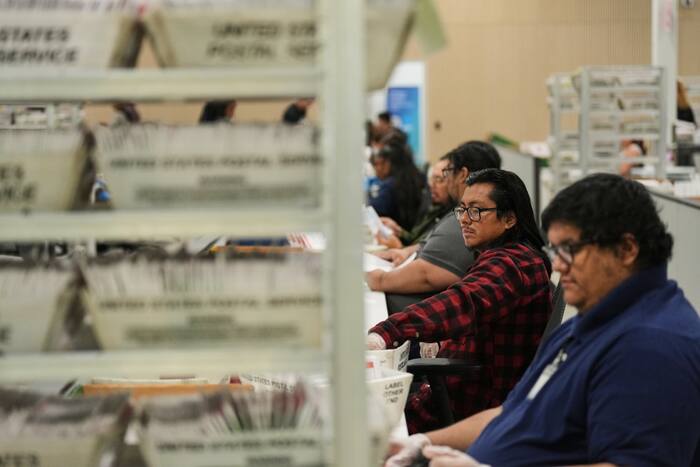
A federal court is being asked to prevent California from counting mail-in ballots from individuals identified as suspected noncitizens by the Trump administration. The U.S. Department of Justice has filed a lawsuit claiming that California has failed to verify the citizenship status of over 20,000 registered voters who may not be U.S. citizens.
California officials, including Secretary of State Shirley Weber, have criticized the federal demands as baseless and lacking evidence. They argue that these actions threaten the voting rights of legitimate voters. The Justice Department's lawsuit is part of a broader crackdown on alleged noncitizen voting, a phenomenon that experts say is extremely rare and often exaggerated.
California's election officials remain steadfast in their commitment to uphold the integrity of the voting process. They assert that they are in compliance with federal law and will not comply with the DOJ's demands.
**Sources:** New York Post, Public Broadcasting Service, The Georgia News Network, The Guardian, WKMG News 6.
Federal judge stops Texas border wall construction over landowner lawsuits.

The Texan.
A federal judge has issued a preliminary injunction halting the construction of the border wall in Texas' Big Bend region, responding to lawsuits filed by landowners and conservation groups. U.S. District Judge Kathleen Cardone determined that the plaintiffs demonstrated a significant risk of irreparable harm if the project proceeded, particularly affecting local residents and the environment.
The Trump administration's plans included building a wall along a 500-mile stretch of the U.S.-Mexico border, a proposal that has faced bipartisan criticism and widespread protests. This ruling provides temporary relief for landowners like David Keller, whose property would be directly impacted by the wall's construction.
As the federal government is expected to appeal the decision, local opposition against the border wall project continues to grow.
**Sources:** Reason Foundation, San Antonio Current, The Texan, The Times of India.
Trump administration intensifies immigration enforcement in California before midterm elections.
KQED Inc.
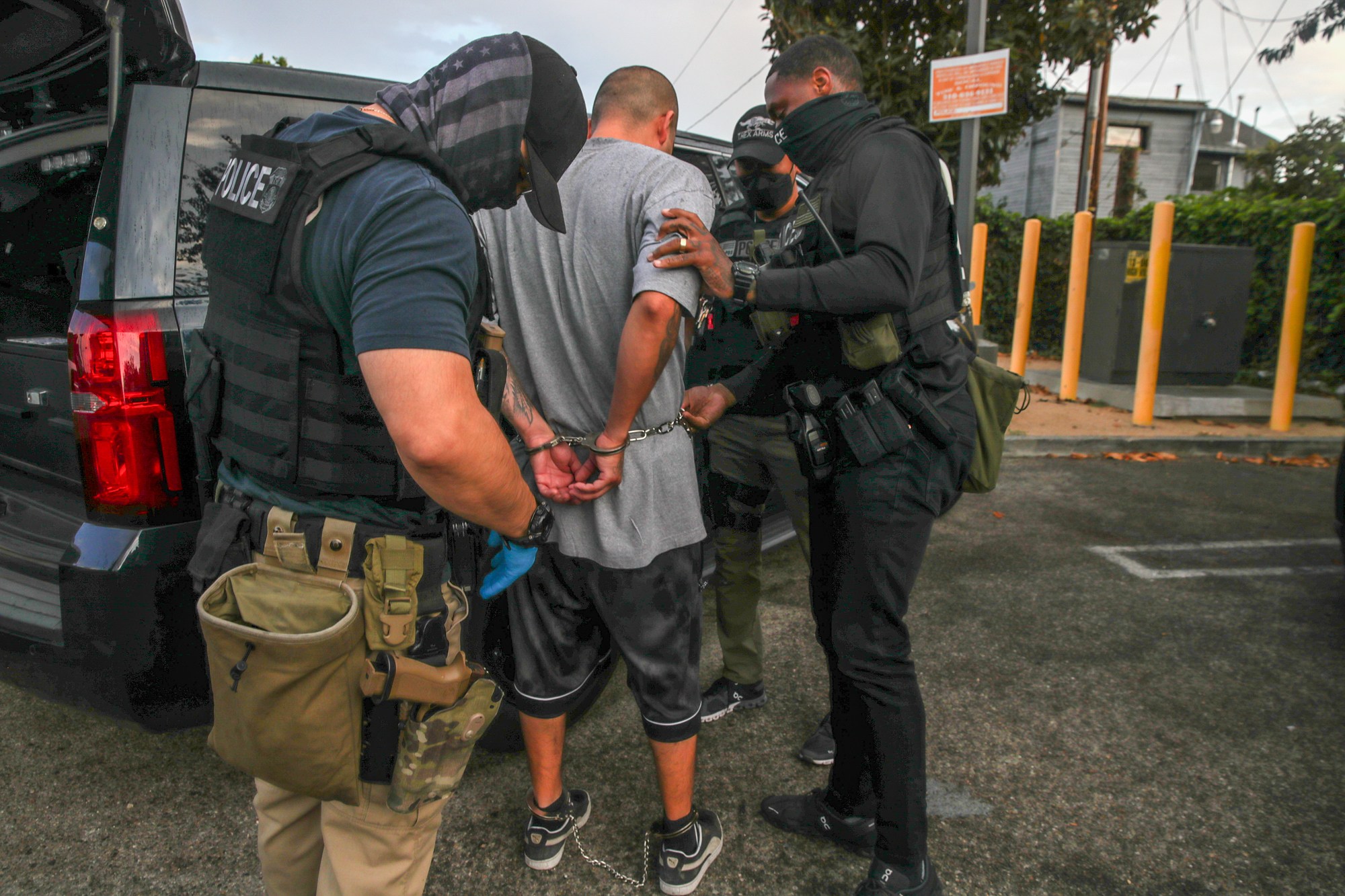
With the midterm elections approaching, the Trump administration is ramping up immigration enforcement in California, raising significant concerns among immigrant communities. Reports indicate that over 100 individuals, primarily farmworkers, have been detained in the Central Valley this month. While the Bay Area has not experienced a similar surge, the fear of ICE raids is causing anxiety among eligible voters.
Elected officials, including East Bay Representative Lateefah Simon, accuse the administration of attempting to intimidate Latino citizens to suppress voter turnout. Governor Gavin Newsom has acknowledged the increase in federal enforcement and criticized the use of fear as a political weapon. Rumors of an ICE operation dubbed "Operation Safe California" have circulated, suggesting a targeted approach in blue states ahead of the elections. However, the Department of Homeland Security has not confirmed specific operations, citing operational security.
Advocates warn that the presence of ICE can deter mixed-status families from voting, even if some members are U.S. citizens. California has enacted laws to limit law enforcement activities near polling places to prevent intimidation; however, these restrictions apply only on Election Day, leaving voters vulnerable in the weeks leading up to the election.
Legal battles are also ongoing regarding voter eligibility, with the Department of Justice challenging California's mailed ballots to over 20,000 registered voters. Community organizations are preparing for potential ICE activity and sharing resources to help families navigate the situation. The psychological impact of these enforcement actions is significant, with reports of increased absenteeism in schools and local businesses suffering.
As the election date nears, the tension surrounding immigration enforcement continues to escalate, highlighting the intersection of immigration policy and electoral participation in California.
**Sources:** CBS News, Democracy Now!, KQED Inc., Maine Beacon, News Break, Inc., Raw Story, Streamline Feed.
Vermont residents oppose ICE by disrupting essential tech infrastructure.

Hawaii's Star-Advertiser
Vermont residents have taken a stand against U.S. Immigration and Customs Enforcement (ICE) by disrupting essential tech infrastructure that supports the agency's operations. Activists have specifically targeted the National Criminal Analysis and Targeting Center (NCATC) located in Williston, Vermont, which plays a crucial role in ICE's surveillance and enforcement activities.
Protests began at Burlington's airport, where residents successfully halted the transport of detainees on commercial flights. This initial success encouraged further direct actions against ICE's facilities. Sit-ins at the White Cap Business Park have led to multiple arrests, but protesters remain undeterred. The local prosecutor declined to press charges against the activists, citing limited resources and the necessity defense. However, the state’s public safety commissioner intervened, directing charges to be filed against the protesters. This intervention has sparked a debate about the role of law in resisting unjust orders.
Activists have drawn parallels between their actions and historical resistance movements, such as those against the Fugitive Slave Act. Recent protests included symbolic acts, such as a funeral procession for lives lost due to ICE actions. Participants also created a garden outside the NCATC to highlight the environmental impact of ICE's operations. The week of action culminated in a large gathering where protesters occupied the entrance of the facility, effectively shutting it down. Organizers reported that ICE employees were advised to avoid the office during the protests.
The actions have garnered support from various community members, showcasing intergenerational solidarity. Vermont's resistance serves as a model for other communities facing similar challenges. Activists encourage others to disrupt ICE's operations by calling its tip line and sharing messages of solidarity.
**Sources:** Hawaii's Star-Advertiser, People's World, The Boston Globe, Time Magazine, Waging Nonviolence.